You’re mid-scroll through a group chat or TikTok comment section and boom — someone drops “STFU.” Angry? Joking? Genuinely shocked? Hard to tell. That four-letter acronym hits differently depending on who sends it and why. STFU is one of the most searched texting slang terms in 2026, and its meaning changes completely based on tone, relationship, and platform. Whether you’re a parent decoding your teen’s messages or just someone tired of being left out of the joke — this guide gives you the full picture, no fluff.
Quick Answer: STFU stands for “Shut The F**k Up.” It’s a blunt four-letter acronym used in texting, online chats, gaming, and social media. Context is everything — among close friends, it often means “No way!” or “That’s insane!” as a reaction to surprising news. In arguments or with strangers, it reads as genuinely aggressive. It’s not always offensive, but it’s never fully neutral either.
What Does STFU Stand For?
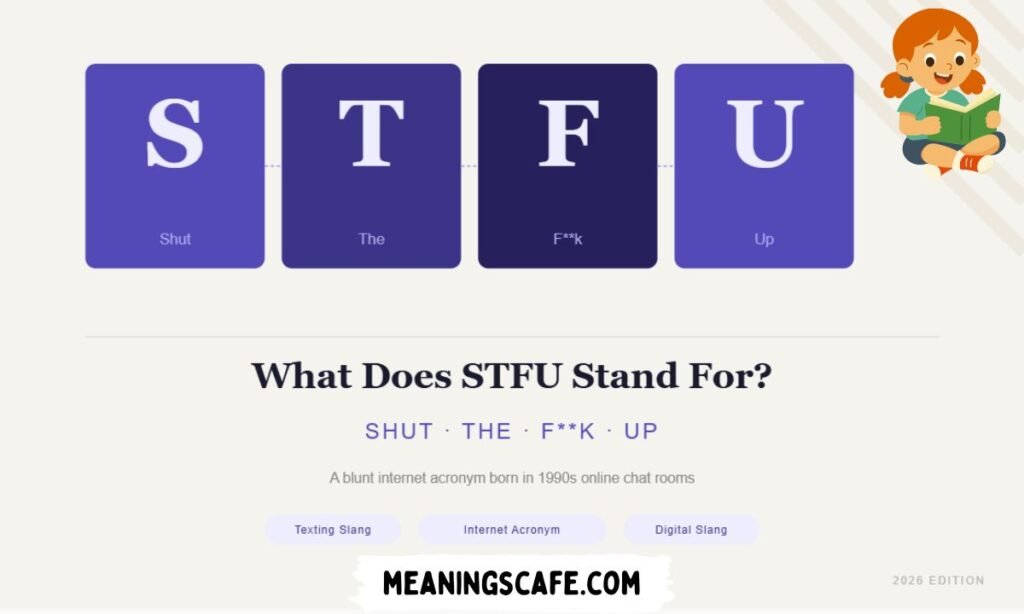
STFU means in its simplest definition is: Shut The Fk Up.** It’s a four-letter abbreviation that packs an enormous emotional punch. In written digital communication, the phrase is used to tell someone directly, forcefully, or sometimes jokingly to stop talking or typing.
It often appears in all caps (STFU) to signal intensity, though the lowercase version (stfu) is common in casual, light-hearted conversations. The meaning of STFU in text rarely changes, but the impact changes entirely based on who says it and why.
The Origins of STFU
Understanding where STFU came from helps explain why it’s everywhere today. The roots of STFU go back to the late 1990s, when online chat rooms, message boards, and early multiplayer games started filling up with fast-moving conversations. Typing speed mattered, and people began abbreviating common phrases to keep up.
Full swear words were often filtered or censored by automatic systems, so acronyms became a clever workaround. STFU slipped past filters while still delivering the full emotional punch of the phrase behind it.
It became widely recognized through platforms like AOL Instant Messenger, MSN, Reddit, and eventually social media apps such as Instagram and Twitter. Initially typed in all caps for emphasis, it spread through meme culture and viral videos, evolving from pure anger expression to casual, humorous use among younger users.
By 2026, STFU is deeply embedded in digital culture. Gen Z uses it humorously, ironically, or sarcastically common in memes, TikTok trends, and casual group chats.
How STFU is Used in Text Messaging?
One of the most important things to understand about STFU means in text is that context is king. The same four letters can feel warm, funny, hostile, or completely neutral depending on what surrounds them. Here are the four most common use cases:
1. Expressing Frustration
This is the most literal use of STFU. When someone has had enough of a conversation or feels genuinely irritated, they use it as a hard stop.
Example:
Alex: “I already explained this three times.” Jordan: “STFU, I’m tired of going in circles.”
2. Joking or Playful Banter
Among close friends, STFU often means the opposite of hostility. Between close friends, STFU frequently means something like “No way!” or “Stop it, that’s too good” a reaction to something funny, surprising, or hard to believe.
Example:
Sam: “I just won backstage passes to the concert!” Riley: “STFU 😱 are you serious right now?!”
3. Online Gaming / Stream Chat
Gaming communities adopted STFU early and use it constantly. In competitive play, teammates use it to cut through distractions and demand focus. In streaming chats, it reacts to wild plays and unexpected moments.
Example:
Player A: “Triple kill with zero health left.” Player B: “STFU that was insane!”
4. Social Media Comments
On TikTok, Instagram, and Twitter/X, STFU appears under shocking posts, jaw-dropping transformations, and unbelievable stories. Here, it acts less as aggression and more as dramatic emphasis.
Example:
Post: “Lost 30 lbs in 4 months before & after photo” Comment: “STFU this transformation is everything 🔥”
Does STFU Mean the Same Thing on Every Platform?
Not quite. The platform changes everything. On TikTok and Instagram, STFU is almost always playful — it shows up under viral videos, jaw-dropping transformations, and shocking reveals as a reaction of pure disbelief. Nobody scrolling TikTok comments reads it as a threat. On Twitter/X, it swings both ways — used humorously in meme threads but also genuinely in heated political debates. In gaming lobbies, it’s part of the culture, thrown around between teammates without much thought. In WhatsApp or iMessage group chats with people you actually know, tone depends entirely on your relationship. The bottom line: the same four letters mean completely different things depending on where they’re typed.
Is STFU Considered Offensive?
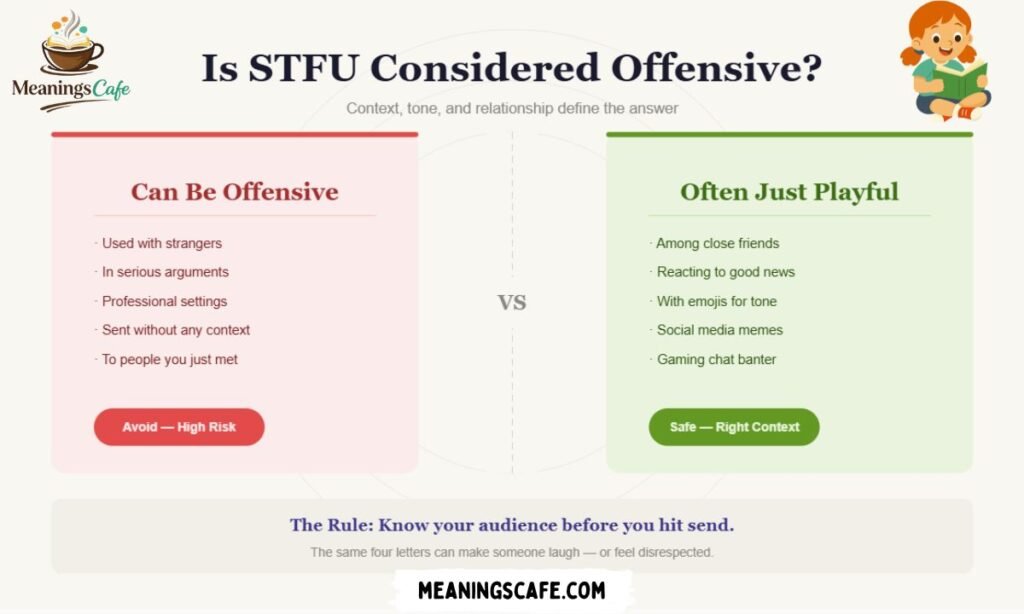
The short answer: it depends. The honest answer: usually, yes so use it carefully.
STFU is a vulgar internet slang term used to tell someone to stop talking. At its core, the phrase is aggressive. However, online culture has softened it in some situations, especially among friends or in humorous contexts. Even when used jokingly, STFU still carries weight.
Here’s a simple guide to judging whether STFU is offensive in a given situation:
| Context | Offensive? |
| Close friends, joking tone | Usually not |
| Arguments with a stranger | Very likely yes |
| Gaming chat with teammates | Borderline / depends on tone |
| Professional or work settings | Absolutely yes |
| Social media memes | Rarely often playful |
| Texting someone you just met | Yes avoid it |
Variations and Similar Text Slang
STFU doesn’t exist in isolation. It belongs to a whole family of internet slang designed for quick, punchy emotional expression. Here are related terms:
| Slang | Meaning | Tone |
| STFU | Shut The F**k Up | Blunt, playful, or aggressive |
| SMH | Shaking My Head | Disappointed or disbelieving |
| LOL | Laugh Out Loud | Humorous, light |
| OMG | Oh My God | Shock or excitement |
| BRB | Be Right Back | Neutral |
| IKR | I Know, Right? | Agreement |
| NGL | Not Gonna Lie | Honest emphasis |
| LMAO | Laughing My A** Off | Humor |
Why Do People Use STFU in Text?
1. Convenience and Speed
The abbreviation became popular because it’s faster to type than the full phrase. In texting culture, speed matters that’s why short forms like LOL, BRB, and OMG became common too. STFU fits neatly into this tradition.
2. Emotional Expression
Four letters carry more emotional weight than a full sentence sometimes. Acronyms don’t erase meaning they compress it. STFU delivers frustration, shock, or laughter in a split second.
3. Cultural Trend
Initially, STFU was aggressive, often used in gaming chats or heated debates. Over time, it evolved into a meme-friendly, playful expression, especially on social media platforms like TikTok, Instagram, and Twitter. Pop culture normalized it further, making it part of the Gen Z digital vocabulary.
How to Respond to STFU?
Receiving an STFU in your chat can feel jarring. Before reacting, read the tone. Here’s how to handle it:
- If it feels playful: Match the energy reply with a laughing emoji or a witty comeback.
- If it feels aggressive: Don’t escalate. A calm “Hey, that felt rude” sets a boundary without drama.
- If you’re unsure: Ask. “Was that a joke or are you actually upset?” clears the air instantly.
- If it comes from a stranger: You’re fully within your right to ignore it or disengage.
What Does STFU Mean When a Girl or Guy Sends It to You?
Context and relationship matter more than gender here, but the intent usually falls into two camps. If someone you’re close with sends STFU after you share good news — a job offer, a funny story, a wild coincidence — it almost always means “No way, stop it, that’s amazing.” It’s a hype reaction, not an insult. If it comes mid-argument or from someone you barely know, the aggressive meaning is far more likely. A good signal to watch: if there’s an emoji attached — 😱😂💀 — it’s almost certainly playful. No emoji, all caps, mid-conflict? Take it seriously. When in doubt, just ask — “was that a joke?” clears it up instantly.
Playful Alternatives to STFU
Want to express the same idea without profanity? These work just as well in most contexts:
- 🤫 “Shush!”
- 😂 “Stop it, no way!”
- 🙈 “You’re lying lol”
- 💀 “I literally can’t”
- 🛑 “Okay hold on—”
- “No wayyy” / “Get out”
- “I can’t deal with you rn 😭”
STFU in Pop Culture and Media
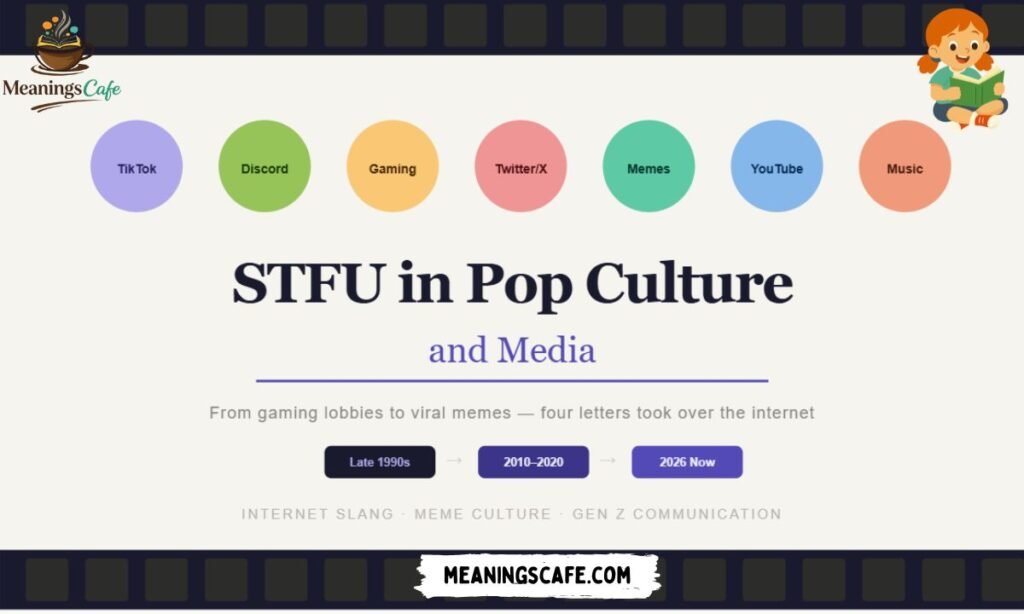
STFU has crossed from internet slang into mainstream culture. Outside texting, STFU sometimes appears in song lyrics or titles, comedy, and gaming culture. Memes featuring STFU have gone viral on Reddit, TikTok, and Twitter, often pairing the phrase with reaction GIFs and humor. STFU appears in memes, YouTube videos, gaming culture, and TikTok trends. Its edgy humor makes it perfect for viral content.
It’s also become a shorthand in online commentary, a quick, punchy response to opinions people find absurd, overdone, or hilariously wrong.
Risks of Using STFU
Despite its humor potential, STFU carries real risks if used carelessly:
- Damaging relationships can come across as deeply disrespectful, even when you meant it lightheartedly.
- Getting banned In strict gaming chats or forums, STFU mean can violate harassment policies and lead to account bans. Similar blunt commands like GTFO carry the same risk.
- Workplace consequences Using it in a professional chat, even accidentally, can harm your reputation or result in HR issues.
- Misreading the tone A frequent misunderstanding is assuming STFU always indicates genuine anger. New users might feel hurt if a friend sends it in response to good news, not realizing it can mean “No way!” in a positive context.
STFU vs. Other Slang Words
| Comparison | STFU | Alternative |
| vs. “Shut Up” | More aggressive, contains profanity | Milder, commonly used |
| vs. “Hush” | Intense, internet-native | Gentle, playful |
| vs. SMH | Commands silence | Expresses disbelief |
| vs. “No way!” | Harsher, edgier | Neutral, safe for all audiences |
Custom Example Sentences Using STFU
Here are original, realistic example sentences showing STFU mean in different real-life digital contexts:
- Shock/Excitement: “STFU you actually got accepted into Harvard?! 🎉”
- Frustration: “I told you three times already. STFU and listen.”
- Gaming: “Bro STFU you just carried the whole match 🔥”
- Playful banter: “STFU you always show up with the best stories 😂”
- Disbelief: “STFU, the sequel is actually confirmed?!”
- Annoyance: “Can you STFU for five minutes while I finish this?”
How to Use STFU Safely?
- ✅ Use it only with close friends who understand your humor
- ✅ Pair it with emojis to signal your tone clearly
- ✅ Read the conversation context before sending it
- ❌ Never use STFU with bosses, elders, or people you don’t know well
- ❌ Avoid it in academic, professional, or formal chats
- ❌ Don’t assume the other person finds it funny just because you do
Cultural Insights on Text Slang
Internet slang like STFU reflects something deeper than just laziness or rudeness. It shows how digital communication creates its own rules, tone, and shorthand. Using STFU reflects digital age communication psychology; its usage has grown beyond aggressive intent, and today often signals camaraderie or playful banter among users who share the same cultural reference points.
Slang also evolves by generation. What Gen Z uses ironically, older generations may read as genuinely hostile. That gap in interpretation is exactly why context awareness matters when navigating internet slang in 2026.
Related Internet Acronyms to Know
If you’re learning about STFU mean, here are other key acronyms worth understanding:
- LOL Laugh Out Loud
- OMG Oh My God
- BRB Be Right Back
- SMH Shaking My Head
- NGL Not Gonna Lie
- IKR I Know, Right?
- LMAO Laughing My A** Off
- TTYL Talk To You Later
- IMO In My Opinion
- WYD What You Doing?
Frequently Asked Questions
What does STFU mean in texting?
It stands for “Shut The F**k Up” used to tell someone to stop talking, or to express shock and disbelief among friends.
Is STFU always rude?
Not always. Among close friends it can be playful, but with strangers or in formal settings, it is considered offensive.
Can STFU be used as a compliment?
Yes, when someone reacts to great news or a funny story with “STFU!” it often means “No way, that’s amazing!”
Is it safe to use STFU at work?
No. It contains profanity and is too informal for professional or workplace communication.
What’s a polite alternative to STFU?
Try “No way!”, “Stop it!”, “I can’t believe it!”, or simply use a 😱 or 😂 emoji to express the same reaction without the profanity.
Conclusion
STFU is four letters that carry a lot of weight. Born in 1990s internet chat rooms, it started as pure aggression — and in the wrong context, it still is. But in 2026, it’s just as likely to mean “No way, that’s insane!” as it is to mean “stop talking.” That’s what makes it tricky, much like decoding other blunt texting slang such as IDGAF.
The real rule isn’t complicated: know your audience. Sent to the right person at the right moment, STFU lands as humor, hype, or playful disbelief. Sent to the wrong person, it ends conversations — and sometimes relationships.
Four letters. Infinite outcomes. Use them wisely.

Devon Conway is the founder of MeaningsCafe.com, with over four years of professional experience in language research and semantic analysis. He specializes in providing precise, insightful content that uncovers the meanings, origins, and significance of words for a global audience.