Have you ever seen TS mean something totally different in two separate chats? You are not alone — millions of people search this every day. This guide breaks down every TS meaning in text, with real examples so you never feel confused again.
Understanding what TS means in texting is now a basic digital skill. From Snapchat to TikTok to plain text messages, TS pops up everywhere — and its meaning shifts fast based on tone and platform.
Why “TS” Confuses So Many People?
TS does not carry one fixed definition. Unlike “LOL” or “BRB,” what TS means in text depends entirely on the conversation around it. One moment it wraps up a chat politely; the next, it expresses frustration or confirms a true event. That flexibility is exactly what makes it confusing.
What Does TS Mean in Text?
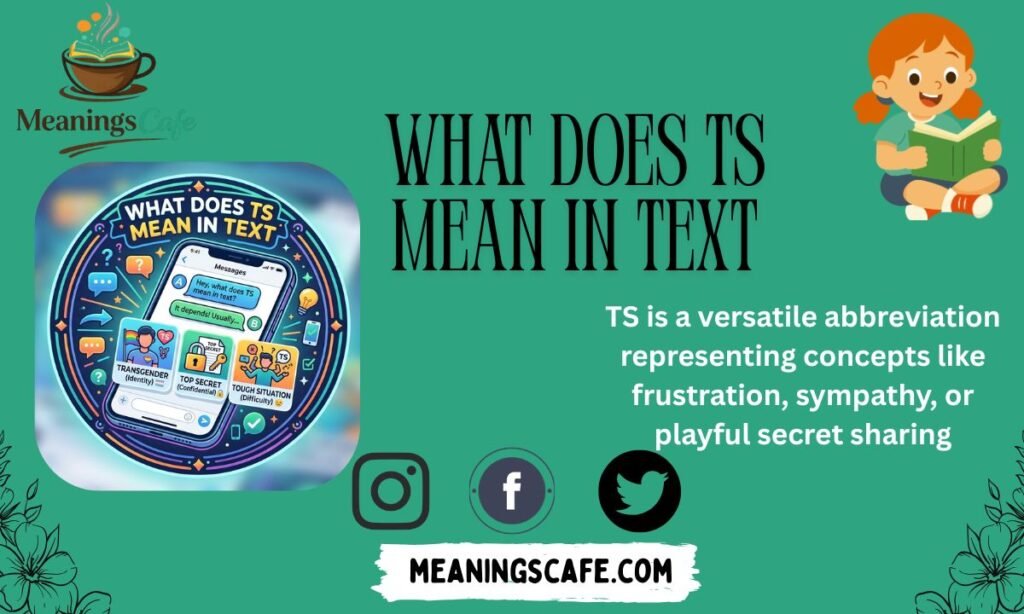
TS is a multi-meaning abbreviation used in informal digital communication. The most common meanings people search for include:
| TS Meaning | Context |
| This Sht / That Sht | Frustration or emphasis |
| That’s Sad | Sympathy or emotional response |
| True Story | Confirming something really happened |
| Talk Soon | Casual sign-off |
| Tough Situation | Empathy in hard moments |
| Top Secret | Playful secrecy |
Context, tone, and platform decide which meaning applies in any given chat.
TS Meaning as “This Sh*t” in Texting
The most widely used TS in everyday texting is “This Sh*t” or “That Sh*t.” It is raw, expressive slang used to react to a situation, event, or thing already mentioned in the conversation.It shares roots with other short, punchy reaction slang like SH, which carries a similar blunt, emotional charge.
- “I can’t believe TS happened again.” → Referring to a frustrating repeated situation
- “TS hits differently at night.” → Talking about a song, feeling, or moment
This meaning exploded in Gen Z chat culture and is now standard across Instagram, WhatsApp, and Twitter/X.
TS Meaning as “That’s Sad”
When someone shares bad news or a painful moment, TS means “That’s Sad” in a sympathetic context. It is a quick emotional acknowledgement without writing a full sentence.
- “My dog passed away today.” → “TS, sending love 💙”
TS Meaning as “True Story”
TS means “True Story” when someone wants to validate a surprising or relatable experience. It stamps a story as real, especially when the event sounds too wild to believe.
- “I ran into my ex at the airport. TS, I almost hid in a shop.”
TS Meaning as “Talk Soon”
As a casual goodbye, TS “Talk Soon” — a polite, friendly sign-off used to close a conversation while promising to reconnect. It is warmer than just ending a chat abruptly.
- “Gotta run now. TS! 👋”
What does TS Mean in Slang?
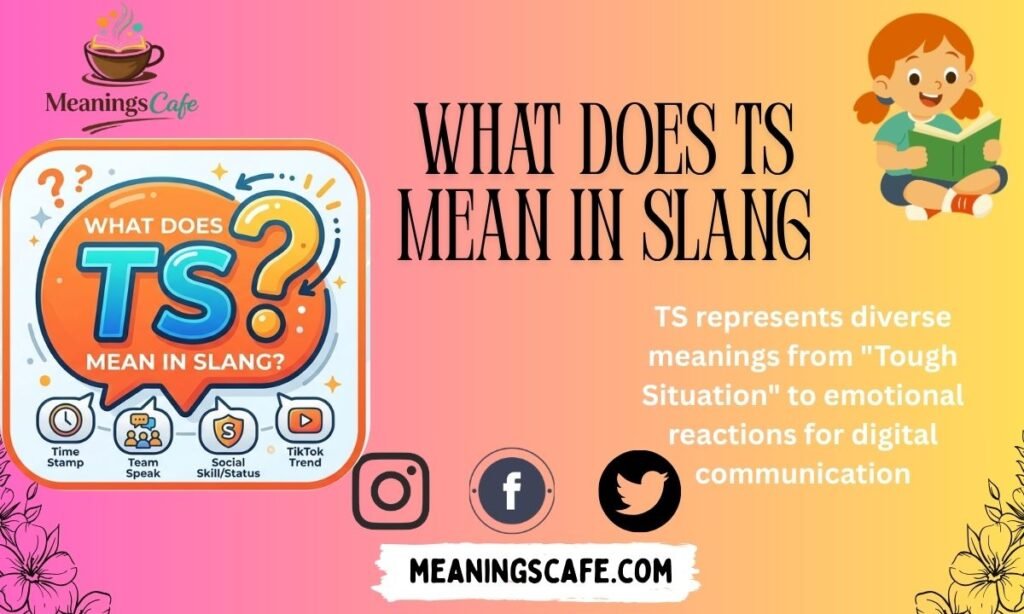
In broad slang usage, TS means anything from “Tough Situation” to “Top Secret” depending on who is saying it and where. Among Gen Z, TS often signals emotional intensity, insider humor, or quick dramatic reaction in a single keystroke— much like the closely related term TSTS, which pops up in the same fast-paced chat contexts.
What does TS Mean Snapchat?
On Snapchat, TS “True Story” or “That’s Serious” most often. Because Snapchat is built for quick, private, disappearing communication, short emotional slang like TS fits naturally into fast-moving snap conversations.
What does TS Mean in TikTok?
On TikTok, TS “True Story” in captions and comment sections, especially under personal storytime videos. Creators also use it to react to relatable or viral moments in comment threads. Occasionally, it refers to a Transition Sound in video editing contexts.
What does TS Mean in Movies?
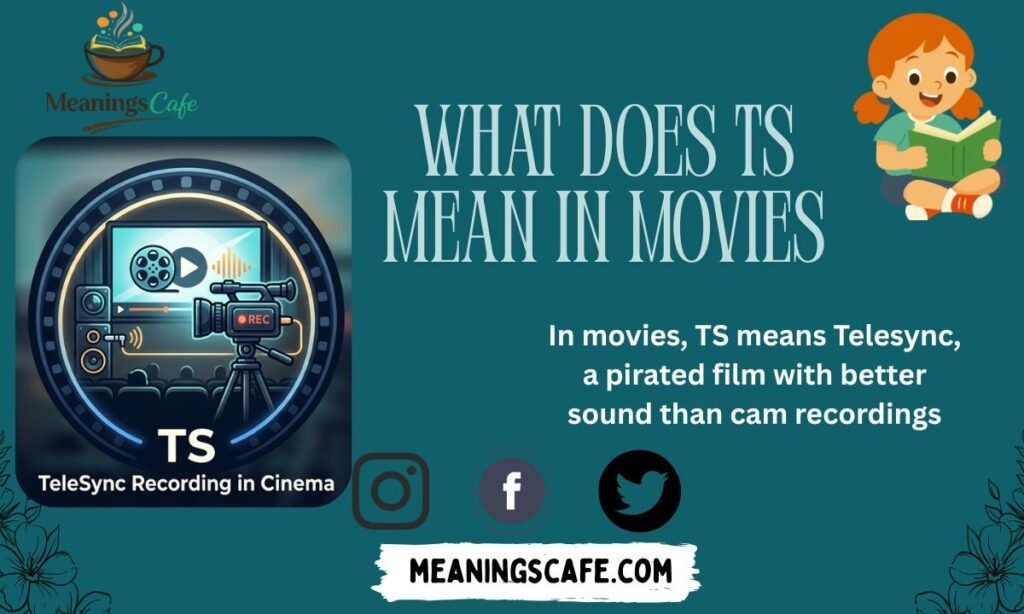
In the movie and film world, TS “Telesync.” A Telesync is a pirated recording of a film captured in a theater using professional audio equipment. It produces better sound quality than a standard cam recording because it often pulls audio directly from a theater’s sound system.
Why Context Matters So Much With TS
Because TS has so many different things, context is the only reliable decoder. Before responding to a TS message, check:
- What was the topic just before it? (Sad news → “That’s Sad”; ending chat → “Talk Soon”)
- What platform are you on? (TikTok → usually “True Story”; Snapchat → often “That’s Serious”)
- What tone does the full message carry? (Frustrated → “This Sh*t”; supportive → “Tough Situation”)
Emotional Tone Behind TS
The emotion behind TS mean changes with every conversation. Here are the four most common tones:
Frustrated Tone
Used as “This Sh*t” when someone is venting, reacting sharply, or expressing disbelief.
- “TS never works out for me.”
Sympathetic Tone
Used as “That’s Sad” or “Tough Situation” to show care and understanding toward someone struggling.
- “You failed the exam? TS, you worked so hard.”
Serious Tone
Used as “True Story” or “That’s Serious” to add weight and credibility to a statement.
- “I saw him leave the building. TS.”
Casual Tone
Used as “Talk Soon” for a friendly, low-pressure goodbye in everyday conversations.
- “Have a good night! TS 😊”
TS in Text Messages vs Social Media
TS in Text Messages
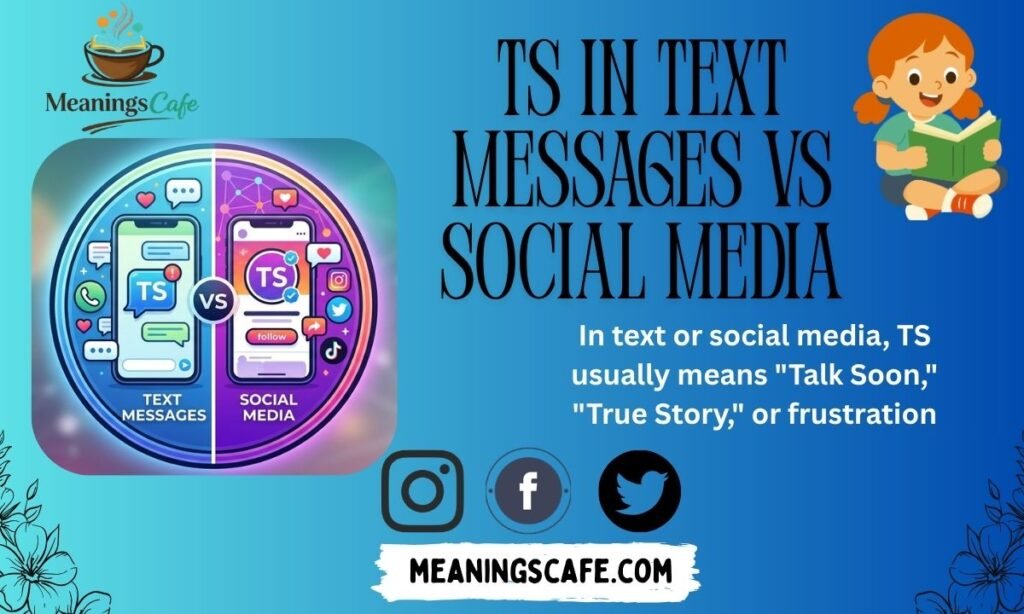
In private one-on-one texts, TS means mostly “Talk Soon,” “True Story,” or “Tough Situation.” The close, personal nature of texting makes sympathetic and sign-off meanings more common here.
TS on Social Media
On open platforms like TikTok, Instagram, and Twitter/X, TS shifts more toward “True Story” and “This Sh*t” — expressions that pack emotion into short comment-section reactions.
TS Meaning in Text from a Girl
When a girl uses TS in a chat, it most often means “True Story” — a way of saying, “I promise this actually happened.” It can also mean “That Sh*t” in a dramatic or funny storytelling context, especially when she is reacting to gossip, situations, or relatable life events.
Is TS Rude or Offensive?
TS can be rude only in specific contexts. When TS “Tough Sh*t” (a dismissive phrase meaning “deal with it”), it carries a blunt, sometimes harsh tone. Used between close friends, it is playful. Used with strangers or in sensitive moments, it can come across as disrespectful.
Other meanings like “Talk Soon,” “True Story,” and “That’s Sad” are completely harmless and friendly.
When You Should Use TS?
Use TS in the right setting for smooth, natural communication:
- ✅ With friends and peers who understand texting slang
- ✅ In casual apps like Snapchat, TikTok comments, and Instagram DMs
- ✅ When you want a quick emotional reaction without typing a full sentence
- ❌ Avoid in professional emails, work chats, or messages to elders
- ❌ Do not use where the recipient may interpret it as rude
How to Respond When Someone Sends TS?
Your reply to TS depends on it’s meaning in that chat:
| If TS Means… | A Good Reply |
| Talk Soon | “You too! Catch you later 👋” |
| True Story | “No way! That really happened?” |
| That’s Sad | “I’m so sorry to hear that 💙” |
| This Sh*t | “Right?! The same thing happened to me.” |
| Tough Situation | “Hang in there, you’ve got this.” |
Common Misunderstandings About TS
- Many people assume TS always means something rude — it does not.
- Older users often mistake TS for a typo rather than intentional slang.
- Some assume TS is the same thing on every platform — it does not; platform shapes meaning.
- Reading TS as “Tough Sh*t” in an emotional support conversation can feel cold when the sender meant “That’s Sad.”
TS vs Similar Texting Slang
| Slang | Meaning | Similarity to TS |
| TTYL | Talk To You Later | Both used as chat sign-offs |
| NGL | Not Gonna Lie | Both confirm honest reactions |
| FR | For Real | Both validate true statements |
| SMH | Shaking My Head | Both react to frustrating situations |
| TBH | To Be Honest | Both express emotional directness |
Why TS Is Popular in Modern Texting?
TS has so many things that it has become one of the most efficient abbreviations in digital language. In a world where speed matters, two letters can express sadness, confirmation, frustration, or a goodbye — all depending on what surrounds them. That kind of linguistic flexibility keeps TS in constant circulation across every major platform.
Cultural Side of TS in Digital Language
TS is more than slang — it reflects how Gen Z and Millennials have reshaped written communication. Short-form expression, emotional efficiency, and platform-driven language evolution are core pillars of modern digital culture. TS fits all three perfectly, which explains why it has stayed relevant while other slang terms faded.
Using TS Correctly — Real Examples
Here are natural, everyday examples of TS mean used correctly:
- “I just spilled coffee all over my laptop. TS, today is ruined.” → This Sh*t
- “She actually showed up uninvited. TS.” → True Story
- “I have to run now, but let’s finish this tomorrow. TS!” → Talk Soon
- “He got fired on his birthday? TS, that’s rough.” → That’s Sad
- “I can’t deal with TS anymore.” → This Situation / This Sh*t
Featured Snippet Style Answer
What does TS mean in text?
TS means different things in different chats. It can stand for “This Sh*t,” “True Story,” “Talk Soon,” or “That’s Sad.” On TikTok and Snapchat, it usually means “True Story.” In movies, TS means “Telesync.” Always check the context to get the right meaning.
Frequently Asked Questions
What does TS mean in a text message?
TS usually means “This Sh*t,” “True Story,” “Talk Soon,” or “That’s Sad” depending on the conversation.
Is TS rude to use?
Only when it means “Tough Sh*t” — all other meanings of TS are casual and friendly.
What does TS mean on Snapchat?
On Snapchat, TS most often means “True Story” or “That’s Serious” in quick private chats.
What does TS mean on TikTok?
On TikTok, TS usually means “True Story” in captions and comments under relatable videos.
Can TS be used in professional messages?
No — TS is informal slang best kept to casual texting and social media conversations.
Conclusion
Now you know that TS means never just one thing — it shifts based on tone, platform, and conversation. Whether it’s “Talk Soon,” “True Story,” “That’s Sad,” or “This Sh*t,” two simple letters can carry a lot of meaning in modern texting. If you’re brushing up on similar validation slang, FR is another term worth knowing.
The golden rule is simple: always read the context before you reply. Once you understand how TS means works across different situations, you will never misread it again — and your digital conversations will feel a lot more natural.

Devon Conway is the founder of MeaningsCafe.com, with over four years of professional experience in language research and semantic analysis. He specializes in providing precise, insightful content that uncovers the meanings, origins, and significance of words for a global audience.