If you’ve ever received a message saying “DW” and paused for a second, you’re not alone. Short forms dominate digital conversations in 2026, from Snapchat streaks to TikTok comments and gaming chats. Among them, DW is one of the most commonly used abbreviations, right alongside quick replies like TY. Understanding the DW mean in modern texting helps you avoid confusion and respond with the right tone. Let’s break it down clearly, simply, and practically.
What Does DW Mean in Text?
The most common DW mean in text is “Don’t Worry.”
It’s a quick and friendly way to reassure someone. Instead of typing the full phrase, people shorten it to DW to save time and keep conversations flowing.
For example:
- “Sorry I’m late.”
“DW, it’s okay.” - “I think I messed up.”
“DW, you’re fine.”
It’s short, calming, and positive — which explains why it’s everywhere online.
Why People Use DW Instead of “Don’t Worry”
Digital communication moves fast. Whether someone is reacting to a viral Fit Check or replying during a busy workday, speed matters.
Here’s why people prefer DW:
- It saves time.
- It feels casual and friendly.
- It fits quick chats.
- It softens serious conversations.
In 2026, short forms also match the relaxed vibe of messaging culture. Long sentences sometimes feel too formal. DW keeps it light and effortless — almost like giving someone instant main-character reassurance, the same way a quick TYSM wraps up gratitude without extra words..
DW Meaning in Texting — Emotional Tone
Although DW looks simple, its emotional tone can vary.
Most of the time, it expresses:
- Comfort
- Reassurance
- Understanding
- Emotional support
For example:
- “I didn’t reply earlier.”
“DW at all!”
It creates calm energy in the conversation.
Emotional Psychology Behind DW
Psychologically, short reassurance phrases reduce anxiety. When someone types DW, it signals safety. It tells the other person, “You’re okay. No stress.”— a very different emotional register than a frustrated SMH reaction.
In online culture, where misunderstandings happen quickly, these small comforting signals matter. They protect someone’s aura and prevent overthinking.
Is DW Ever Sarcastic?
Yes — tone depends on context.
If someone says:
- “Yeah, DW… whatever.”
It might sound passive-aggressive. Sarcasm usually shows through punctuation or emojis.
However, most of the time DW is genuinely supportive.
What Does DW Mean in Slang?
In slang usage, DW almost always stands for “Don’t Worry,” but the vibe can change slightly.
Sometimes it feels playful:
- “DW, I got you.”
- “DW, that glow-up is loading.”
Other times, it carries confident energy:
- “DW, I’ll handle it.”
- “DW, trust the process.”
The meaning remains the same, but tone adds personality.
DW Meaning in Social Media
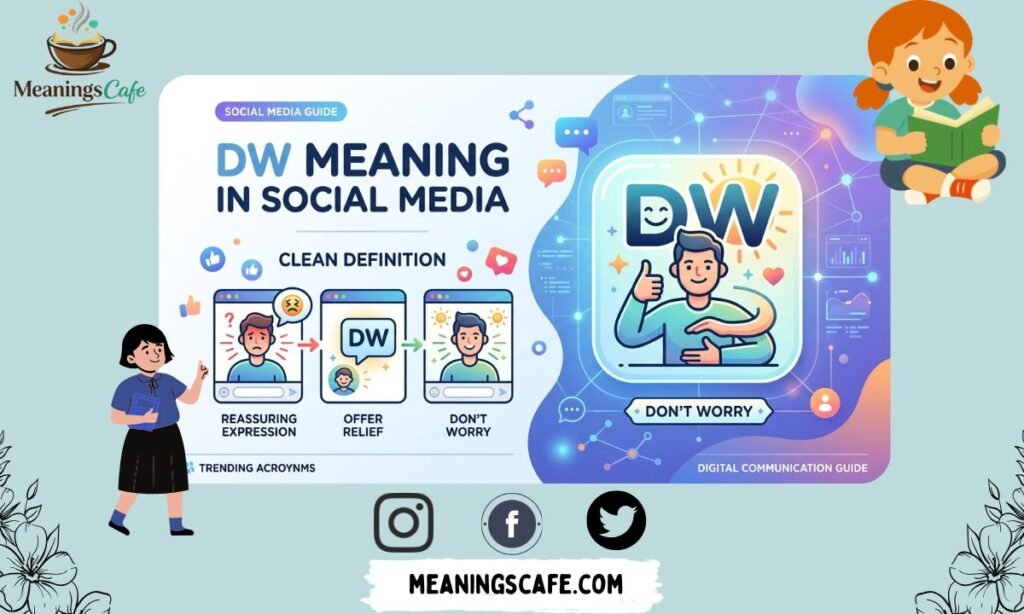
The DW mean stays consistent across platforms, but context changes how it feels.
What Does DW Mean on Snapchat?
On Snapchat, DW often appears in quick replies.
Example:
- “Sorry I broke our streak.”
“DW, we’ll rebuild it.”
It keeps the vibe relaxed and drama-free.
What Does DW Mean on TikTok?
On TikTok, DW appears in the comments.
Example:
- “I almost deleted this video.”
“DW, your aura is unmatched.”
Here, it encourages creators and keeps positivity flowing.
DW Meaning on Instagram
On Instagram, DW appears in DMs or comment threads.
Example:
- “My Fit Check wasn’t good today.”
“DW, you ate that.”
It blends with modern slang naturally.
DW Meaning from a Girl
If a girl texts DW, she usually means “Don’t Worry.”
Examples:
- “Sorry I couldn’t call.”
“DW.” - “I look tired today.”
“DW, you look great.”
Tone matters here. Sometimes DW signals reassurance. Sometimes it signals emotional maturity. It rarely has hidden meaning unless paired with cold responses or dry energy— the kind you’d get from a flat NTY instead.
DW in Different Situations
The DW mean adapts depending on the scenario.
| Situation | Meaning | Tone |
| Apology | Don’t worry | Comforting |
| Small mistake | It’s okay | Supportive |
| Delayed reply | No problem | Casual |
| Emotional stress | Calm down | Reassuring |
| Minor conflict | Let it go | Peaceful |
Understanding situation-based tone prevents misinterpretation.
Real Conversation Examples Using DW
Here are realistic examples:
Example 1:
Friend: “I forgot your birthday.”
You: “DW, it happens.”
Example 2:
Coworker: “Sorry for the late email.”
Reply: “DW, thanks for sending it.”
Example 3:
Sibling: “I messed up the recipe.”
Reply: “DW, we’ll order food.”
Example 4:
Comment: “I almost didn’t post this.”
Reply: “DW, main-character energy!”
These examples show how natural and flexible DW is.
Can DW Have Other Meanings?
Yes, though less common.
In certain contexts, DW can mean:
- Dear Wife (in relationship forums)
- Data Warehouse (in business or tech)
- Doctor of Welfare (rare academic abbreviation)
However, in everyday texting, the DW mean almost always refers to “Don’t Worry.”
What Does DW Mean in Medical Terms?
In medical language, DW may stand for “Dextrose in Water,” a type of IV fluid. This usage appears in hospital or academic settings, not casual chats.
Context makes the difference.
How to Tell Which Meaning DW Has?
To identify the correct DW mean, check:
- Conversation topic – Is it casual or professional?
- Platform – Social media or workplace email?
- Tone – Comforting or technical?
- Audience – Friends or colleagues?
In 90% of text conversations, it simply means “Don’t Worry.”
When Should You Use DW?
You can use DW when:
- Someone apologizes.
- Someone feels embarrassed.
- You want to calm tension.
- You want to be reassured quickly.
Avoid using DW in serious professional emails unless the tone is informal.
It works best in relaxed, friendly communication.
DW vs Similar Text Abbreviations
Here’s how DW compares to other popular abbreviations:
| Abbreviation | Meaning | Tone |
| DW | Don’t Worry | Reassuring |
| NVM | Never Mind | Dismissive |
| IDC | I Don’t Care | Indifferent |
| TBH | To Be Honest | Honest |
| BRB | Be Right Back | Neutral |
Unlike IDC, which may feel cold, DW adds warmth and emotional intelligence.
Common Mistakes People Make With DW
- Using it sarcastically without clarity.
- Using it in very formal business emails.
- Assuming it has a hidden meaning.
- Overusing it in serious emotional conversations.
Keep it simple and authentic.
Why Understanding DW Matters Today?
Digital communication defines relationships in 2026. Small phrases carry big emotional signals. Knowing the correct DW mean ensures smoother conversations and prevents misunderstandings.
In fast-moving online spaces — from viral trends to daily group chats — clarity matters. Understanding short forms keeps your communication confident and modern.
Expert Insight on Digital Language
Language experts note that abbreviations survive when they combine efficiency and emotional value. DW succeeds because it delivers comfort in just two letters.
It supports connection without extra effort — which is why it remains popular across generations.
Frequently Asked Questions
What does the DW mean in texting?
It usually means “Don’t Worry.”
Is DW always positive?
Most of the time, yes. It expresses reassurance.
Can DW be sarcastic?
It can, but tone and punctuation usually reveal sarcasm.
What does DW mean on social media?
On most platforms, it means “Don’t Worry.”
Does DW have professional meanings?
Yes, in technical fields, but in casual chat it usually means “Don’t Worry.”
Conclusion
DW is a short but powerful abbreviation that usually means “Don’t Worry.” It offers reassurance, reduces tension, and keeps digital conversations smooth. Whether used in Snapchat chats, TikTok comments, or everyday texting, its tone is mostly positive and supportive— much like a simple MK closes out a chat on a calm note.
Understanding how and when to use it helps you communicate clearly and confidently in today’s fast-paced online world.

Devon Conway is the founder of MeaningsCafe.com, with over four years of professional experience in language research and semantic analysis. He specializes in providing precise, insightful content that uncovers the meanings, origins, and significance of words for a global audience.