If someone just texted you “WYA” and you stared at your screen for a second — you’re not alone. Many people wonder what does WYA mean in text, especially when they see it on Snapchat, TikTok, or in casual chats, right alongside similar quick check-ins like WYF.
This three-letter acronym is everywhere in 2026, from DMs to comment sections. Understanding it takes less than a minute, but using it correctly depends on context, tone, and relationship.
In this guide, you’ll learn what does WYA mean in text, how it’s used in real conversations, and when you should or shouldn’t use it.
Why Everyone Keeps Texting “WYA” in Text
Modern texting is fast, casual, and low-effort by design. Nobody wants to type “Where are you at right now?” when three letters do the same job.
WYA fits perfectly into that culture — it’s quick, conversational, and carries subtle emotional weight depending on who sends it and how.
What Does WYA Mean in Text? (Simple Definition)
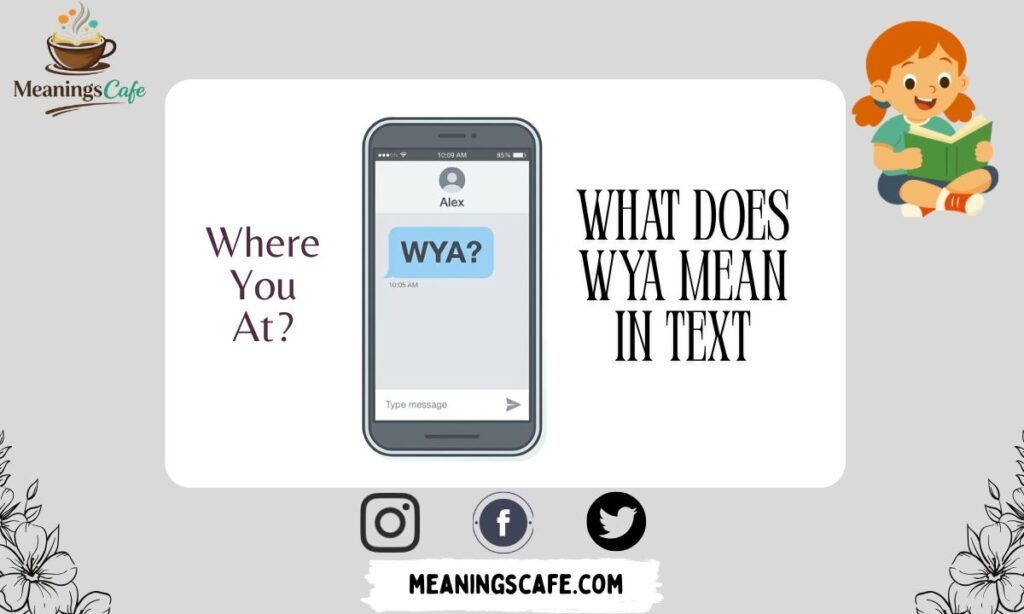
WYA stands for “Where You At?”
It’s a casual, abbreviated way of asking someone about their current location or what they’re up to. It’s used across SMS, iMessage, Snapchat, Instagram DMs, and TikTok.
Quick Answer for Featured Snippet: WYA = “Where You At?” — an informal text slang used to ask someone’s location or availability, popular across Gen Z and Millennial communication platforms.
Understanding what does WYA mean in text helps you communicate better in modern digital conversations.
The Core Meaning of WYA
At its base, WYA is a location check. But in practice, it carries three different layers of meaning:
| Context | What WYA Really Means |
| Friend texting before hangout | “Are you on your way / almost here?” |
| Late-night text from a crush | “Are you free? Can we meet?” |
| Group chat message | “Who’s already there / where is everyone?” |
| Worried friend or partner | “I haven’t heard from you — are you okay?” |
This makes understanding what does WYA mean in text very important in modern digital communication.
How WYA Is Used Across Platforms
WYA Meaning in Chat (General Texting)
In everyday SMS or messaging apps, WYA is purely casual. It replaces the longer phrase “where are you?” without losing meaning.
What Does WYA Mean on Snapchat?
On Snapchat, WYA often appears in streaks or quick snaps. Since Snapchat is heavily location-aware, WYA can literally mean “share your location” or “let’s link up soon.”
WYA Meaning on TikTok
On TikTok, WYA shows up in comment sections and video captions, often used humorously — like tagging a friend on a relatable video with “WYA 😭” meaning “this is so us, where are you?”
WYA Meaning from a Girl vs. a Guy
The sender’s identity often adds emotional context:
WYA from a girl:
- Usually means she’s thinking about you and wants to connect
- Can carry a flirty or affectionate tone, especially late at night
- May signal she wants to make plans or check in emotionally
WYA from a guy:
- Often logistics-focused: “are you coming?”, “let’s meet up”
- In a romantic context, it can signal interest or spontaneous invitation
- In a friend group, it’s almost always purely practical
Why Is WYA So Popular in Texting?
Three reasons WYA has stuck around and grown:
- Speed — Three letters replace an entire sentence
- Tone flexibility — It can be sweet, urgent, casual, or flirty
- Platform neutrality — Works on every app, no context lost
It’s also deeply tied to Gen Z’s communication style: low effort, high implication, not unlike the quick availability check baked into WYGG.
This is one of the reasons why many people search what does WYA mean in text to better understand its usage in modern communication.
How WYA Is Used in Real Conversations in Text?
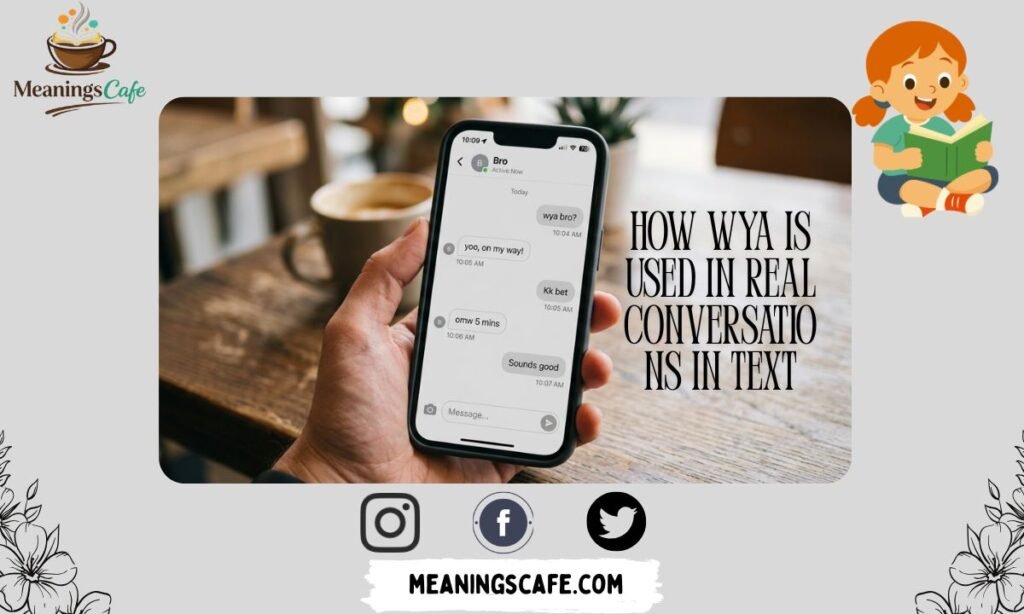
WYA in Casual Friend Conversations
Alex: wya bro the game already started
Jordan: omw 5 mins out
WYA in Romantic or Flirty Texts
Riley: wya tonight? 👀
Sam: no plans yet… Why?
WYA in Group Chats
Maya: guys wya??? we’re all waiting at the table
Tom: parking rn
Jess: literally walking in
WYA as a Check-In or Concern
Mom: wya? haven’t heard from you all day
You: Sorry, the phone died! I’m home now
Different Emotional Tones of WYA
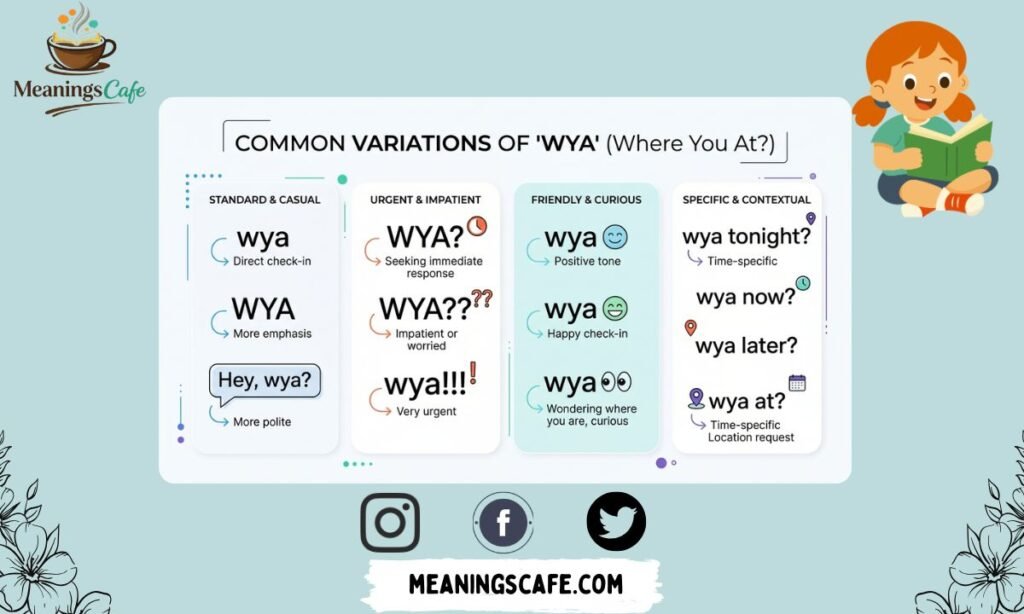
How Punctuation and Emojis Change WYA
The same three letters communicate very differently based on what follows them:
| Version | Tone |
| wya | Neutral, casual |
| WYA?? | Urgent, slightly annoyed |
| wya 😊 | Friendly, warm |
| wya tho 👀 | Flirty, curious |
| WYA!! | Panicked or very excited |
| wya… | Sad, missing someone |
Is WYA Rude or Polite?
WYA is neutral by default — not rude, not formal. However, context matters:
- Sending “WYA” to your boss or professor = inappropriate
- Sending it to a close friend while running late = totally fine
- Sending it repeatedly when someone doesn’t respond = can feel pushy
As a rule: use WYA only with people you’re already on casual terms with.
When You Should Avoid Using WYA?
- Professional settings — emails, work Slack, or with seniors/superiors
- First messages to someone you don’t know well
- Formal conversations or customer service interactions
- When asking for a specific, precise location (use full language instead — or check an ETA instead of a vague WYA)
WYA vs Similar Slang Terms
| Slang | Meaning | Key Difference |
| WYA | Where You At? | Location + availability |
| WYD | What You Doing? | Activity, not location |
| HMU | Hit Me Up | Invitation to contact |
| LMK | Let Me Know | Awaiting a response |
| IRL | In Real Life | Refers to physical space |
| OTW | On The Way | Status update, not a question |
How to Reply to WYA Naturally?
Not sure what to say back? Here are natural, human responses:
- If you’re nearby: “omw! like 10 mins”
- If you’re busy: “at work run, what’s up?”
- If it’s late and flirty: “home 😏 why?”
- If you missed it: “sorry just saw this — still need me?”
- If you don’t want to share: “why lol 😂”
WYA in Different Age Groups
| Age Group | Usage Style |
| Teens (13–19) | Very frequent, across all platforms |
| Young Adults (20–30) | Common, especially in friend groups |
| Adults (30–45) | Occasional, mainly in casual texts |
| 45+ | Rare; may not recognize the acronym |
Cultural Understanding of WYA
WYA originated in African American Vernacular English (AAVE), where “Where you at?” is a grammatically natural phrasing. As Black culture heavily influences internet slang and digital communication, WYA spread rapidly into mainstream online spaces. Recognizing this origin is part of using the term respectfully and with cultural awareness.
Common Misunderstandings About WYA
- ❌ “WYA means something rude” — It doesn’t. It’s a casual location question.
- ❌ “Only Gen Z uses it” — Millennials and older adults use it too.
- ❌ “WYA and WYD are the same” — WYA = location; WYD = activity.
- ❌ “It always has romantic meaning” — Context decides that, not the word itself.
Why Understanding Text Slang Matters?
Digital communication is now a primary language layer. Misreading “WYA” as aggressive or confusing it with “WYD” can cause real miscommunication — especially in new friendships or early romantic connections. Staying fluent in current slang helps you:
- Respond appropriately and confidently
- Avoid awkward misinterpretations
- Connect more naturally with people across age groups
Frequently Asked Questions
What does WYA mean in texting?
WYA means “Where You At?” — a casual way to ask someone’s location or availability.
Is WYA the same as WYD?
No — WYA asks about location, while WYD asks about what someone is currently doing.
What does WYA mean on Snapchat?
On Snapchat, WYA means “Where You At?” and is often used to meet up or check someone’s location.
Can WYA be flirty?
Yes — depending on context, timing, and emojis, WYA can carry a flirty or romantic tone.
Is it okay to use WYA in professional messages?
No — WYA is informal slang and should only be used in casual, personal conversations.
Conclusion
Now you clearly understand what does WYA mean in text and how it is used in different situations.
Whether it’s a quick check-in from a friend, a flirty message, or a simple question about location, WYA is a flexible and widely used slang term— much like knowing when someone’s on DND rounds out your read on why they haven’t replied yet. Its meaning always depends on context, tone, and relationship.
Once you recognize these factors, it becomes easy to respond naturally and confidently in any conversation.

Devon Conway is the founder of MeaningsCafe.com, with over four years of professional experience in language research and semantic analysis. He specializes in providing precise, insightful content that uncovers the meanings, origins, and significance of words for a global audience.