If you’ve ever received a message that said “tf are you doing?” and froze for a second — you’re not alone. What does TF mean in text? It’s one of the most searched slang abbreviations today, right up there with WTH, and the answer is simpler than you think. TF stands for “the fk”** — a shortened, punchy version of a phrase most people already know well.
This guide breaks down every angle of TF: where it shows up, what emotion it carries, when it’s appropriate, and when you should think twice before sending it.
Why “TF” Confuses So Many People Today?
Slang moves fast. New abbreviations pop up daily across Instagram, TikTok, Discord, and iMessage threads. TF is short enough to look like an acronym for something professional (it does have a few technical uses), but in everyday texting, it almost always carries an expressive, often frustrated tone.
The confusion mostly comes from context. Without the right read on the conversation, TF can feel aggressive, playful, or just mysterious.
What Does TF Mean in Text? (Main Meaning)
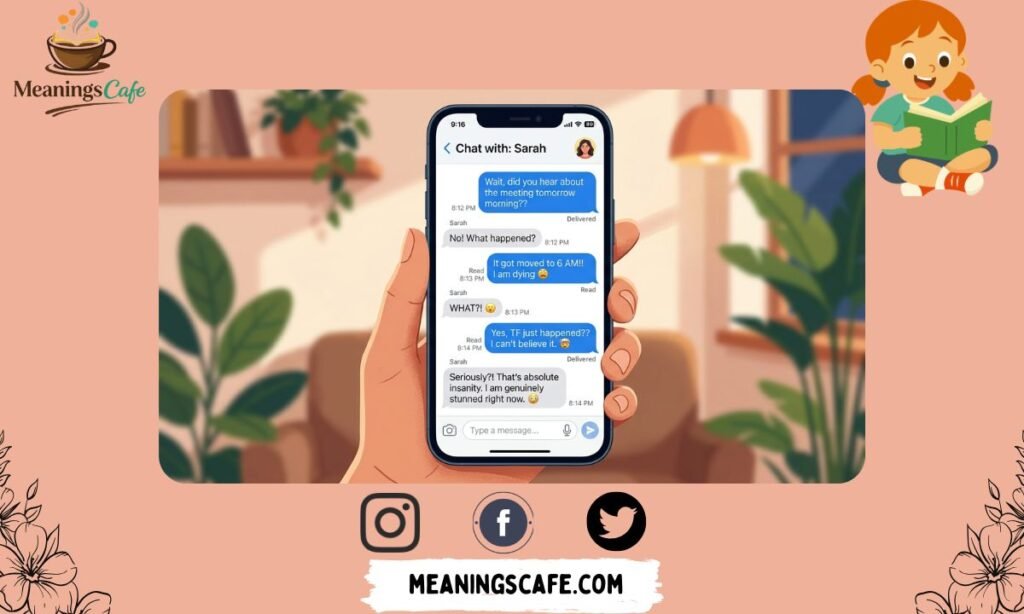
TF = “The Fk”**
It’s used as an intensifier — a way to add emphasis or express a strong reaction without typing out the full phrase.
TF Meaning in Texting Explained in Simple Words
Think of TF as a shortcut for surprise, disbelief, anger, or confusion. People drop it mid-sentence to punch up what they’re feeling.
| Full Phrase | TF Version |
| “What the f**k?” | “What tf?” |
| “Who the f**k is this?” | “Who tf is this?” |
| “How the f**k did that happen?” | “How tf??” |
| “That’s the f**k up part.” | “That’s tf up.” |
Why People Use TF Instead of Full Words?
Speed is a big factor. Nobody wants to type a long phrase when two letters carry the same energy. But beyond speed, TF also softens the visual harshness of typing out the full expletive — especially on shared screens or semi-public group chats.
It’s a social filter. You still express yourself fully, but it looks less aggressive on the surface.
Key reasons what does TF mean in text became a texting staple:
Faster to type
Less visually harsh than the full word
Still carries full emotional weight
Feels natural in casual digital conversation
Common in meme culture and internet humor
Different Emotions Behind TF
TF isn’t one-size-fits-all. The emotion behind it shifts based on context and punctuation.
- Shock: “They did tf what??”
- Anger: “tf is wrong with you”
- Playful disbelief: “tf 😂 you’re wild”
- Genuine confusion: “tf does that even mean”
- Frustration: “I been waiting tf long”
Psychology Behind TF Usage
Linguists call this kind of language expressive intensification — using compressed, high-energy words to signal emotional involvement. When someone uses TF, they’re not just communicating information. They’re communicating how much something hit them.
TF Meaning Slang — Is It a Bad Word?
Is TF a Bad Word?
Technically, yes — TF is an abbreviated form of a profane expression. But in modern slang use, the line between “bad word” and casual expression has blurred significantly, especially in digital communication.
Is TF Rude?
It depends entirely on the situation. Between close friends who use this kind of language naturally, TF reads as casual and expressive. In a message to a boss, parent, teacher, or stranger — it reads as disrespectful, not unlike how blunt as STFU can land.
When You Should Avoid TF
Avoid TF in these situations:
- Professional emails or work chats
- Conversations with elders or authority figures
- Formal academic settings
- When texting someone for the first time
- Sensitive or serious discussions (grief, conflict resolution, etc.)
TF in Different Texting Contexts
TF in Casual Texting
Between friends, TF is completely normal. It flows into everyday conversation without friction.
“tf did you eat? I’m starving lol “”tf you mean you’re not coming tonight??”
TF in Angry or Serious Texts
When TF appears without humor or emoji, it usually signals real frustration. Pay attention to the surrounding context — tone drops fast, sometimes escalating into a full-on GTFO if things get heated.
“tf is going on with you lately” — This isn’t a joke.
TF Meaning When Written Alone
Sometimes people just reply: “tf?”
This typically means: “Are you serious right now? I can’t believe this.” It’s a reaction, not a question requiring an answer.
Does Capitalization Matter?
Not really — but TF (all caps) can feel slightly more aggressive or emphatic than lowercase tf. In digital communication, caps often signal heightened emotion or shouting energy.
TF in Social Media, Memes, and Internet Culture
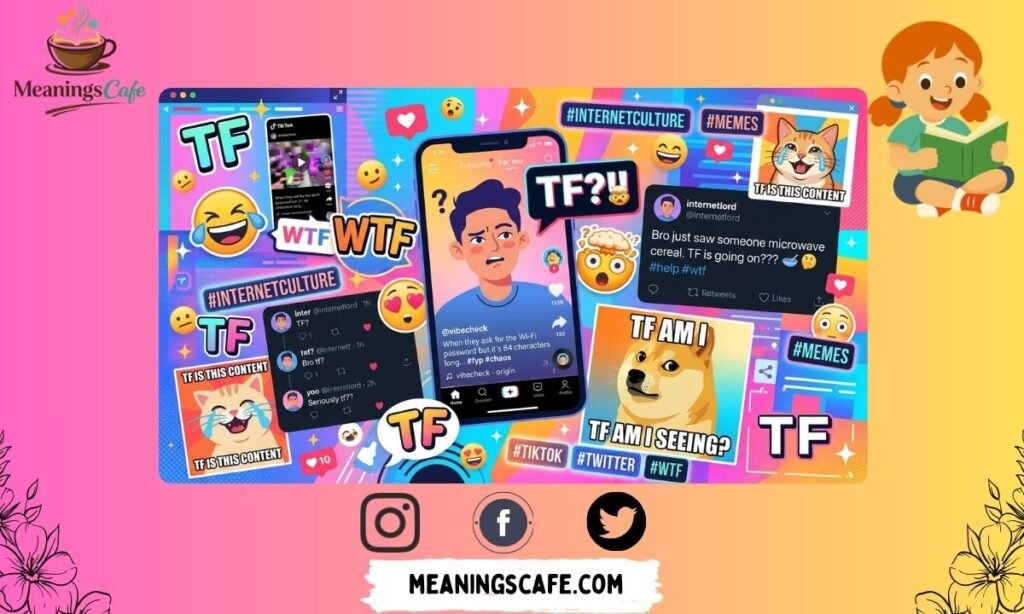
TF is everywhere online. It’s embedded in meme formats, reaction GIFs, and comment sections across Twitter/X, Reddit, TikTok, and YouTube. Many users first search what does TF mean in text after seeing it in viral posts.
Common meme formats using TF:
“POV: you just said tf out loud to your parents”
Reaction memes captioned “tf is going on here”
Storytelling videos where creators say “I said tf you mean??”
TF has become a cultural shorthand for disbelief — the internet’s universal eyebrow raise.
TF vs WTF — What’s the Difference?
| Feature | TF | WTF |
| Full form | The f**k | What the f**k |
| Common use | Emphasis mid-sentence | Standalone exclamation |
| Tone | Flexible | Usually shock or disbelief |
| Age of usage | Newer | Older, widely recognized |
| Example | “Who tf did this?” | “WTF just happened?” |
WTF is the older, more well-known version. TF is leaner and often slipped into sentences as a grammatical intensifier rather than a standalone reaction. It carries a similar don’t-care edge to IDGAF in that both lean on rawness for impact.
How Different Groups Use TF?
How Teens Use TF
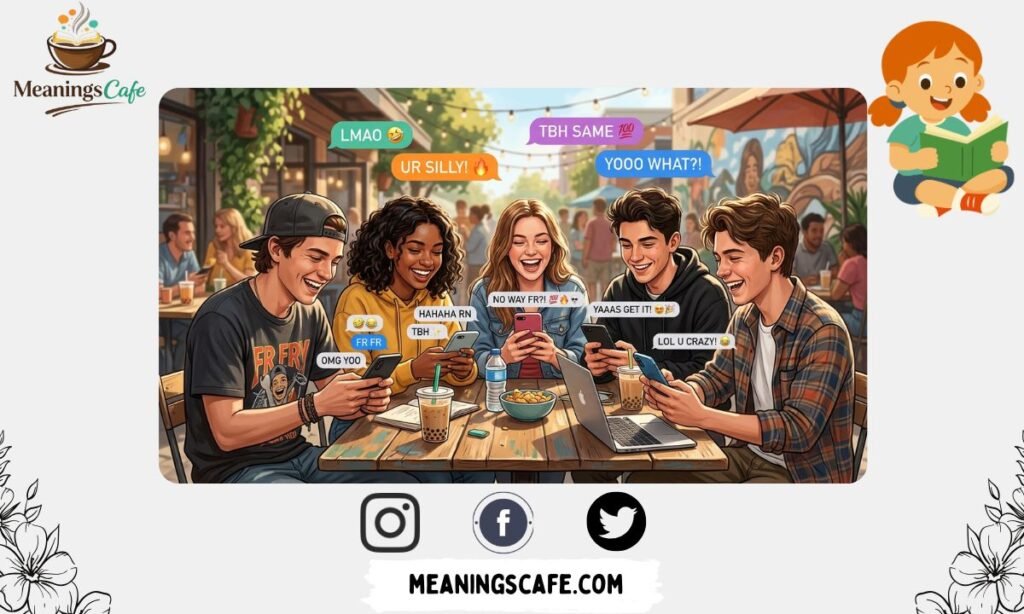
For Gen Z, TF is almost invisible — it’s so embedded in their communication style that it barely registers as profanity. Understanding what does TF mean in text comes naturally because it’s part of their everyday digital language. It’s playful, reactive, and often paired with laughing emojis.
How Adults Use TF
Millennials and older adults use it too, but more selectively — usually with close friends or in clearly informal settings. Adults tend to be more aware of the audience before using it.
TF in Group Chats
Group chats amplify TF usage. It’s a quick way to react to something wild without writing a paragraph. The brevity makes it perfect for fast-moving threads.
TF in Romantic Texts
In flirty or romantic contexts, TF takes on a teasing, playful tone:
“tf are you doing texting me this late 😏”
It signals comfort and familiarity — the kind of language reserved for someone you’re close to.
TF in Gaming and Online Communities
In gaming lobbies and Discord servers, TF is practically standard vocabulary. You’ll see it in reactions to clutch plays, bad teammates, and hilarious moments.
“tf did you just do bro 💀” — usually a compliment in disguise.
Why TF Became Popular?
The rise of TF tracks directly with the growth of texting culture and mobile-first communication. Shorter is better on small screens. Platforms like Twitter trained users to pack maximum meaning into minimum characters. TF fit that format perfectly.
It also spread through meme culture — once a phrase lands in enough viral formats, it becomes part of the shared language of the internet.
Common Mistakes with TF
- Using it with the wrong audience — always read the room
- Overusing it — loses impact fast
- Sending it when you’re actually angry — can escalate conflict quickly
- Assuming everyone knows it — some people, especially older generations, may not
Real Chat Examples
Example 1 — Shock:
Friend: “I got us front row tickets” You: “tf?? Are you serious right now 😭”
Example 2 — Playful:
“tf were you thinking ordering pineapple pizza”
Example 3 — Frustration:
“I’ve been waiting for 45 minutes tf”
Example 4 — Solo reaction:
Someone shares wild news. Reply: “tf.”
Frequently Asked Questions
What does TF mean in a text message?
TF stands for “the f**k” — used to express surprise, confusion, anger, or disbelief in casual texting.
Is TF a bad word?
It’s derived from a profane phrase, so it’s considered informal and inappropriate in professional or formal settings.
What’s the difference between TF and WTF?
WTF means “what the f**k” and is a standalone exclamation; TF is used more as a mid-sentence intensifier.
Can TF be used in a friendly way?
Yes — between friends, TF often carries a playful, teasing tone rather than a genuinely negative one.
Does capitalization change the meaning of TF?
Slightly — all-caps TF can feel more intense or emphatic, but the core meaning stays the same.
Is TF used only by teenagers?
No — it’s widely used across age groups, though it’s most common among younger generations online.
Conclusion
So — what does TF mean in text? It means “the f**k,” and it’s one of the most versatile, emotionally loaded abbreviations in modern digital communication. It can be funny, frustrating, shocking, or playful depending on how it’s used— and once you’ve got it down, decoding a stray SMH in the same thread will feel just as easy.
The key is always context and audience. Know who you’re talking to, match the energy of the conversation, and use TF for what it does best: quick, punchy expression with zero extra words needed.

Devon Conway is the founder of MeaningsCafe.com, with over four years of professional experience in language research and semantic analysis. He specializes in providing precise, insightful content that uncovers the meanings, origins, and significance of words for a global audience.